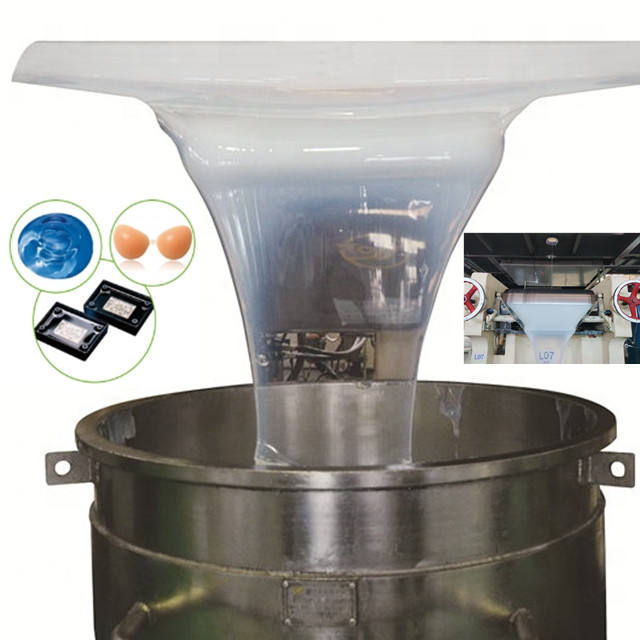
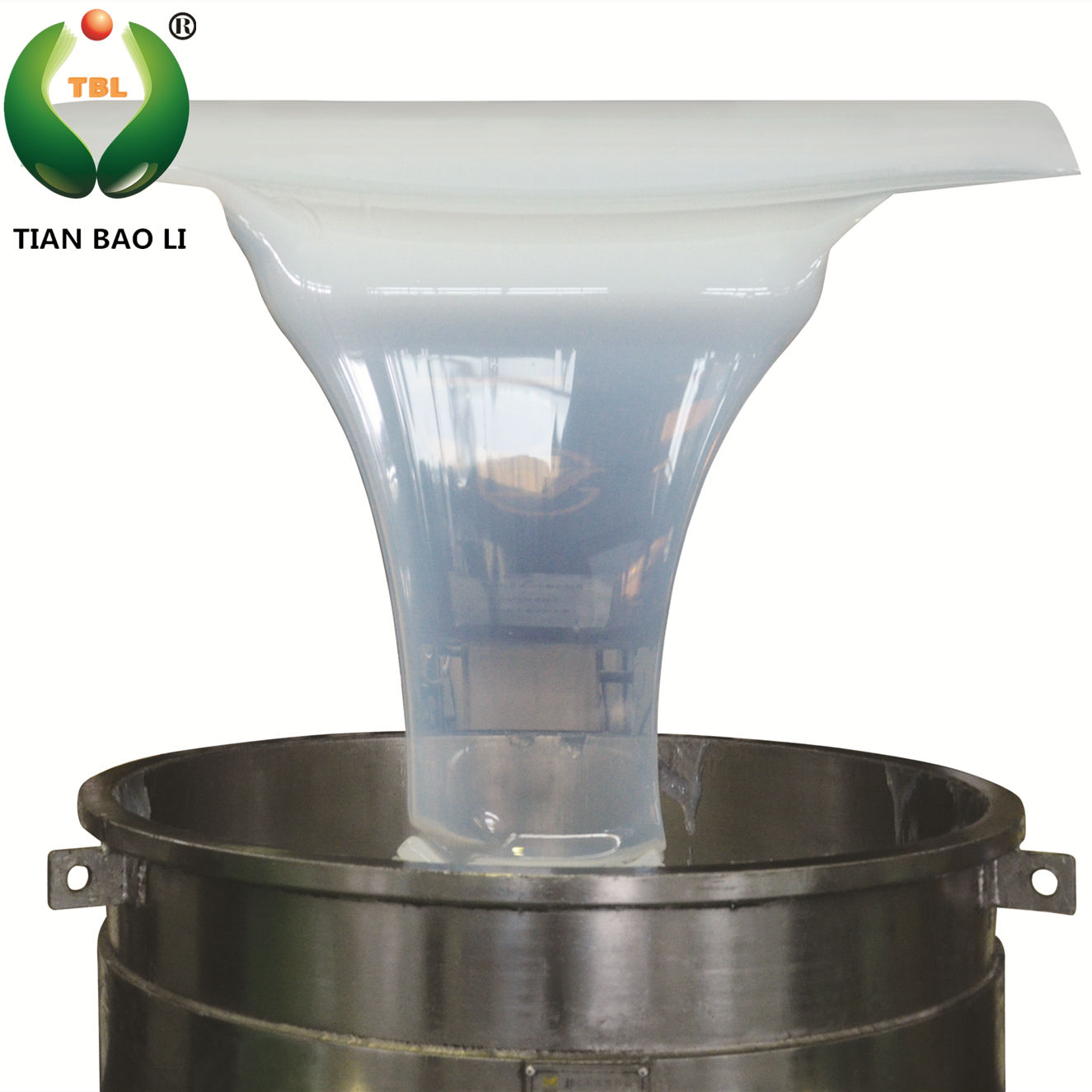
TBL-6600 series is a highly transparent two-component addition type silicone gel. It has extremely low viscosity after mixing the two components, does not require vacuum defoaming, can be automatically defoamed or defoamed by debubble machine, can be cured at room temperature or heated cured, and the material does not shrinkage during curing.
Application
• Breast pad, breast patch special - women's underwear filler
• Precision electronic components - potting protection for module power supplies and circuit boards with high transparency and recovery requirements
• Potting of tank filters – sealing of instruments and meters
• Silicone powder puff
Features and benefits
• High transparency
• Very low viscosity
• Low linear shrinkage
• 100% solids, no curing by-products
• Operating temperature -50℃~200℃
• Platinum vulcanization, environmental friendly and non-toxic
• Quick rebound
Instructions
• Manual operation: prepare the materials of components A and B, accurately weigh the two components A and B with a mass ratio or volume ratio of 1:1, stir the A and B components evenly by hand or machine, and place them in a box of vacuum machine to exhaust the bubble for 3 to 5 minutes, and then poured into the electronic components that need to be sealed, and cure at room temperature or under heating.
• Machine operation: Put the A and B components into the A and B cylinders of the two-component filling machine respectively, and then adjust the machine parameters to ensure the quality or volume of the A and B components discharged from the machine. The ratio is 1:1, then turn on the machine, mix components A and B to the mixing head and stir evenly, inject them into the electronic components to be potted, and cure at room temperature or under heating.
Precautions
This product is an addition type silicone rubber of platinum vulcanization. The following substances will affect or hinder the curing of the product:
• Compounds containing tin (Sn2+), lead (Pb2+), mercury (Hg2+) and other heavy metal ions;
• Organic Tin and silicone adhesive containing organotin;
• Organic compounds containing N, S, P;
• Some unsaturated hydrocarbon plasticizers, etc.
Packing specifications
20kg/drum, 40kg/set.
200kg/drum, 400kg/set
Storage
Store in a sealed container below 25℃. The validity period of components A and B is twelve months from the date of production.
| Model |
Color |
Mixing ratio |
Operation time
(min,25℃) |
Curing time |
Cone Penetration
/Centrum 102.5g(1/10mm) |
Viscosity |
| TBL-6600-00 |
Translucent |
1:1
|
30-50
(Can adjust) |
4-6h(25℃)/
20-30min(80℃) |
100-120 |
1000cps |
| TBL-6600-10 |
Translucent |
1:1 |
30-50
(Can adjust) |
4-6h(25℃)/
20-30min(80℃) |
160-180 |
1000cps |
| TBL-6600-20 |
Translucent |
1:1
|
30-50
(Can adjust) |
4-6h(25℃)/
20-30min(80℃) |
200-220 |
1000cps |
| TBL-6600-25 |
Translucent |
1:1
|
30-50
(Can adjust) |
4-6h(25℃)/
20-30min(80℃) |
220-240 |
1000cps |
| TBL-6600-30 |
Translucent |
1:1
|
30-50
(Can adjust) |
4-6h(25℃)/
20-30min(80℃) |
300-320 |
1000cps |
Note: The above data penetration, operation time, curing time can be adjusted according to customer's requirements.
In recent years, liquid silicone rubber has become a popular choice for keypads and other items in high-risk areas such as hospitals. This material comes in various forms such as sheets, rolls, slabs and pastes. Because it has the added benefit of being able to stretch, liquid silicone rubber is able to bond with hollow plastic parts such as air-compression valves and air ducts to provide a secure, flexible, and lightweight support. It also has many other uses in industries where stability is critical, such as those involving the construction and transportation of ships, trains, and trucks.
As liquid silicone rubber ages, it changes from a solid to a semi-solid state. This means that while it still provides an effective barrier to abrasion, it can now also be used to fill in holes and cracks. For instance, if a road is being repaired, the road-repair contractor can put down a sheet of liquid silicone rubber and fill in the area by driving over it with a piece of equipment. The thickness and pliability of this product allows it to mold itself to any shape. By carefully thinning out the liquid silicone rubber, it can then be applied to a variety of other items including air compressors, pipe fittings, and pipes or tubing to provide a wide range of filling options.
When selecting liquid silicone rubber, it is important to determine the level of elasticity required for the application in question. As it is solid, it will not expand unless stretching. This makes it ideal for use in a variety of key lock applications where a thin, flexible layer is desired such as in automobile windshields where it provides excellent structural support. It is also used to fill in voids between holes in the vehicle as well as in the engine compartment. Liquid rubber is also often used to fill in scratches on cars and boats.
The benefits of liquid silicone rubber for keypad printing are fairly self-explanatory; it is extremely durable and elastic, and it is both cost effective and flexible. Because it is able to expand to fill in gaps, it does not damage the surface to which it adheres. As long as the correct amount of silicone is used, it will prevent surface damage to itself as well as prevent the spread of mold. This can help make it an excellent choice for key pad printing where aesthetic appearance is secondary to functionality.
Of course, like all rubber products, liquid silicone rubber for keypad printing will not remain smooth and supple forever. Eventually, the expanded polymer will begin to strain and warp. When this occurs, it is important that you remove the rubber from the keypad in question before it begins to degrade. If you attempt to force the substance, it will result in cracking and a release of harmful bubbles that contain high levels of adhesive.
Fortunately, this is an uncommon problem with liquid-filled keypads. More often, the material will simply crumple when pressed. If you find that your keypad material is beginning to tear at the edges, it may be time to replace it with another type of keypad material. In many cases, you can find replacement keypads online at affordable prices.